
Vessel Logic: which candle containers are safe, and how to test a new jar before you sell it
October 19, 2026 · 4 min read
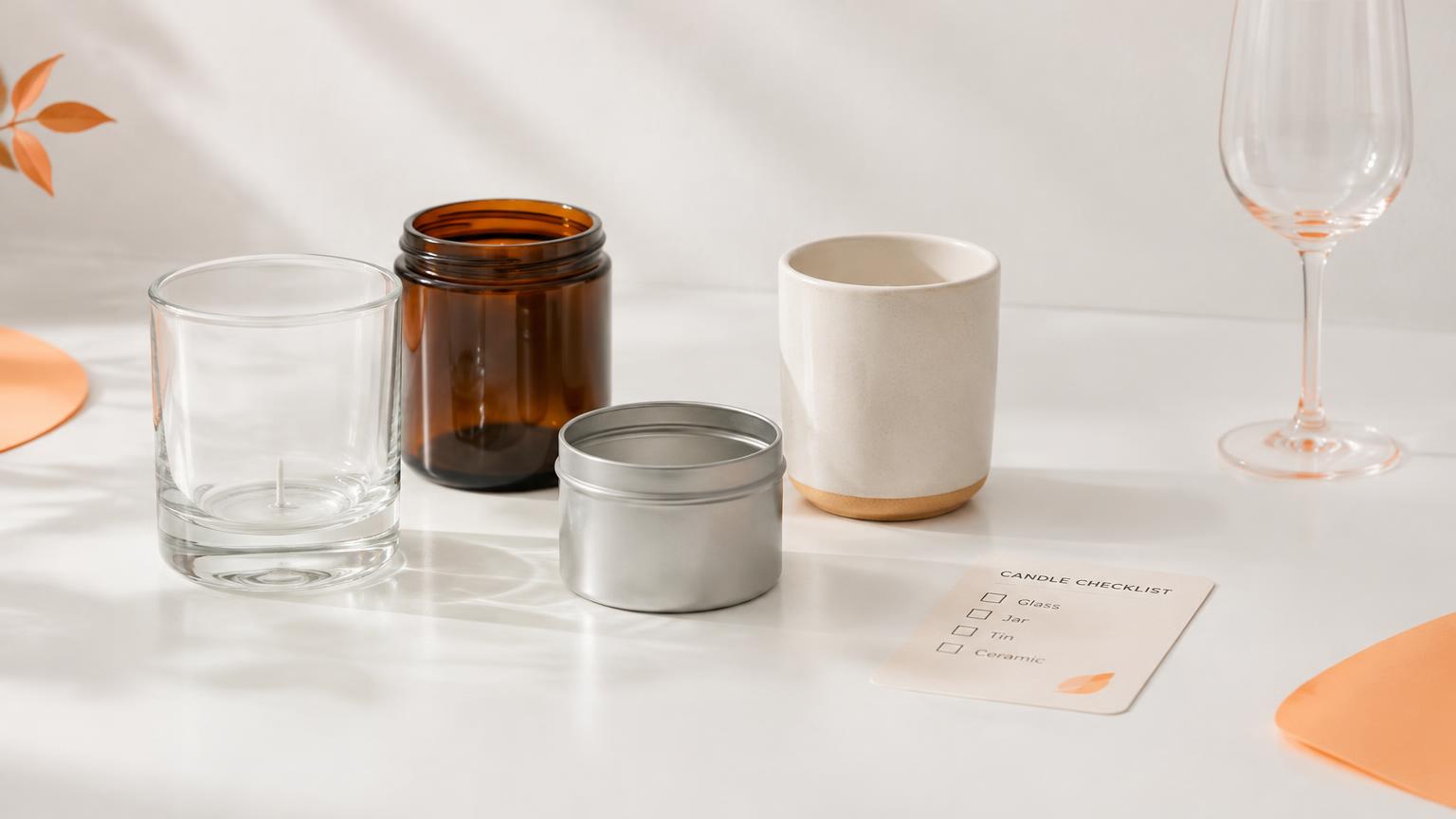
The short answer: a safe candle container is a vessel sold or confirmed for candle use, made of heat-tolerant material with no cracks, thin spots or flammable finishes, and proven in a full-life burn test with your exact wax, wick and fill level. Thick glass tumblers, candle-grade tins and suitable glazed ceramics are common choices. Wine glasses, thin decorative glass, wood and plastic are poor choices. Looking sturdy is not the same as being tested.
Why the container matters as much as the wax
A container candle holds a liquid melt pool and a flame for hours. The vessel heats up, the wax level drops and the flame gets closer to the base. Problems such as cracking, an overly hot exterior or a flame touching the side often appear near the end of the candle's life—not in the first burn. That is why testing to the bottom matters.
Common candle container materials compared
| Material | Typical strengths | Watch for |
|---|---|---|
| Thick glass tumbler or jar | Widely available for candles; shows the wax | Thin walls, bubbles, chips, decorative glass not rated for heat |
| Candle-grade metal tin | Light, durable, good for travel and samples | Seams that leak, coatings not meant for heat, hot exterior |
| Glazed ceramic or stoneware | Premium look, good for refill programs | Hairline cracks, unglazed interiors that absorb oil, unknown supplier specs |
| Concrete | Distinctive modern style | Porosity and sealing; needs supplier guidance and careful testing |
| Wood, plastic, thin wine/stem glass | — | Generally unsuitable for an open-flame container candle |
Red flags before you even pour
- The supplier does not describe the vessel as suitable for candles.
- Visible chips, cracks, bubbles or uneven wall thickness.
- A narrow opening with a wide base that traps heat, or a very tall, narrow shape.
- Painted, lacquered or glued decorations near the rim or flame area.
- Inconsistent batches from the supplier—one case thicker, the next thinner.
A practical test plan for a new vessel
- Record the vessel name, supplier, lot or order date, and measured diameter.
- Choose a wick using the supplier's guidance for that diameter, wax and fragrance load. Pour several identical samples.
- Cure according to your wax supplier, then burn in a draft-free spot on a heat-safe surface, never unattended.
- Burn in repeated cycles all the way to the end of the candle's life. Note melt pool, flame height, soot and how hot the outside feels.
- Inspect the vessel after each cycle and at the end for cracks, discoloration or a flame touching the wall.
- Change one variable at a time if something fails, and retest before selling.
Diameter drives the wick, the wick drives the heat
Two jars with the same capacity can need very different wicks. A wider vessel needs a larger melt pool; a narrow vessel can overheat with the same wick. If you switch jars, treat it as a new product test—not a quick swap. Our wick testing guide and tunneling guide cover melt-pool records in detail.
Fill weight changes with the vessel too
A new jar changes how much wax and fragrance you need per unit, your cost per candle and the net weight on your label. Use the free candle calculator to work out wax and fragrance in ounces for the new capacity, then see the jar fill-weight guide and cost-per-candle guide before you set a price.
For general consumer-side burning guidance you can reference on labels and inserts, the National Candle Association's safety tips are a useful starting point. They do not replace your own testing.
Keep vessel records with the product
When a customer or retail partner reports a problem, you want to know which vessel lot, wick and recipe that candle used. In WaxLogic, the vessel lives in the product recipe as a supply, burn tests link to the product and batch, and batches record what was poured. The logic is simple: approve a vessel once, record it, and retest whenever the vessel, supplier or recipe changes.
Run your candle business in one place
Inventory, recipes, production, wholesale and invoicing — 7 days free, no card needed.
Start free trial