
Candle wick testing, step by step: how to pick the right wick before you sell a single candle
October 7, 2026 · 6 min read
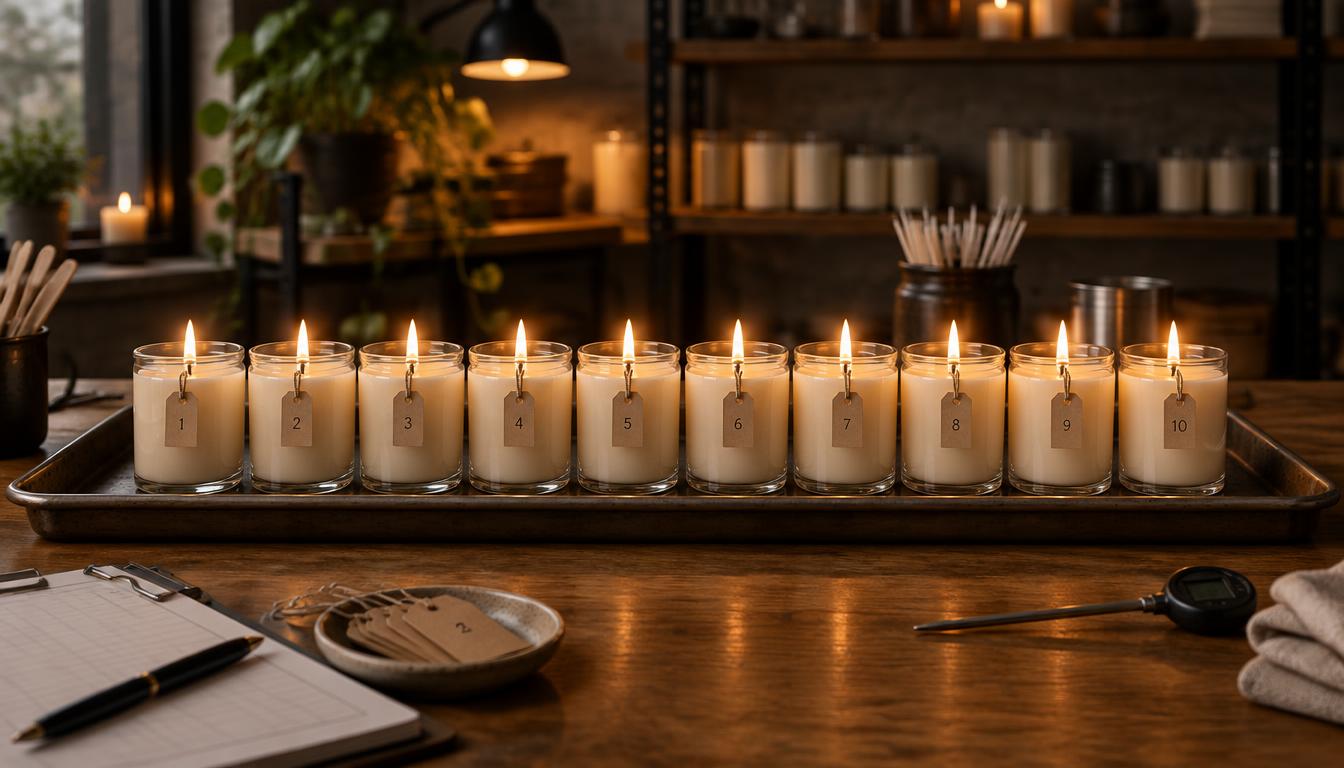
The short answer: pour identical candles with the only variable being the wick, burn them in 4-hour sessions, and measure melt pool, flame height, mushrooming, and soot at each check-in. The right wick reaches a full melt pool in 2–4 hours without a flame over about 3 inches, heavy mushrooming, or soot on the glass.
Why it matters beyond quality: a wick that's too small tunnels and drowns; too large and the candle burns hot, fast, and potentially unsafe. If you sell candles, wick testing isn't a craft nicety — it's product safety and your liability. The National Candle Association's safety guidance is the baseline every maker should know.
The setup: pick your exact production recipe — same wax, same fragrance oil at the same load, same vessel, same dye. Fragrance and dye change how a wick burns, so a wick that works in an unscented test tells you almost nothing about your real candle. Pour one candle per candidate wick, label everything, and let them cure as you normally would.
The burn: light all candidates at once and burn for 4 hours — that's the session most standards are built around, and it's how customers actually burn candles. Check in at 1 hour, 2 hours, and 4 hours. At each check, note the melt pool diameter and depth, flame height and stability, any mushrooming on the wick tip, and soot or smoke.
What 'good' looks like: a full melt pool (wax melted edge to edge) by hour 2–3, about a quarter to half inch deep. A steady flame under roughly 3 inches. Minimal mushrooming. No soot on the vessel walls. After the 4-hour burn, extinguish, let it cool fully, and repeat for at least two more sessions — the first burn and the third burn can behave differently.
What 'bad' looks like: tunneling (melt pool never reaches the edge) means wick up. A deep, fast melt pool with a tall, dancing flame, heavy carbon on the wick, or soot means wick down. If the glass is too hot to comfortably touch, stop — that combination doesn't ship.
Record everything, because you will not remember. Which wick series and size, which wax lot, which fragrance and load, what happened at each hour, and your pass/fail call. In WaxLogic, burn test logs attach directly to the product, recipe, and batch they belong to, so when a customer asks about a candle six months later you can pull up exactly how that combination performed. It's included in the 7-day free trial.
Run your candle business in one place
Inventory, recipes, production, wholesale and invoicing — 7 days free, no card needed.
Start free trial