
How to make scented candles that actually smell strong (8 fixes for weak throw)
October 13, 2026 · 3 min read
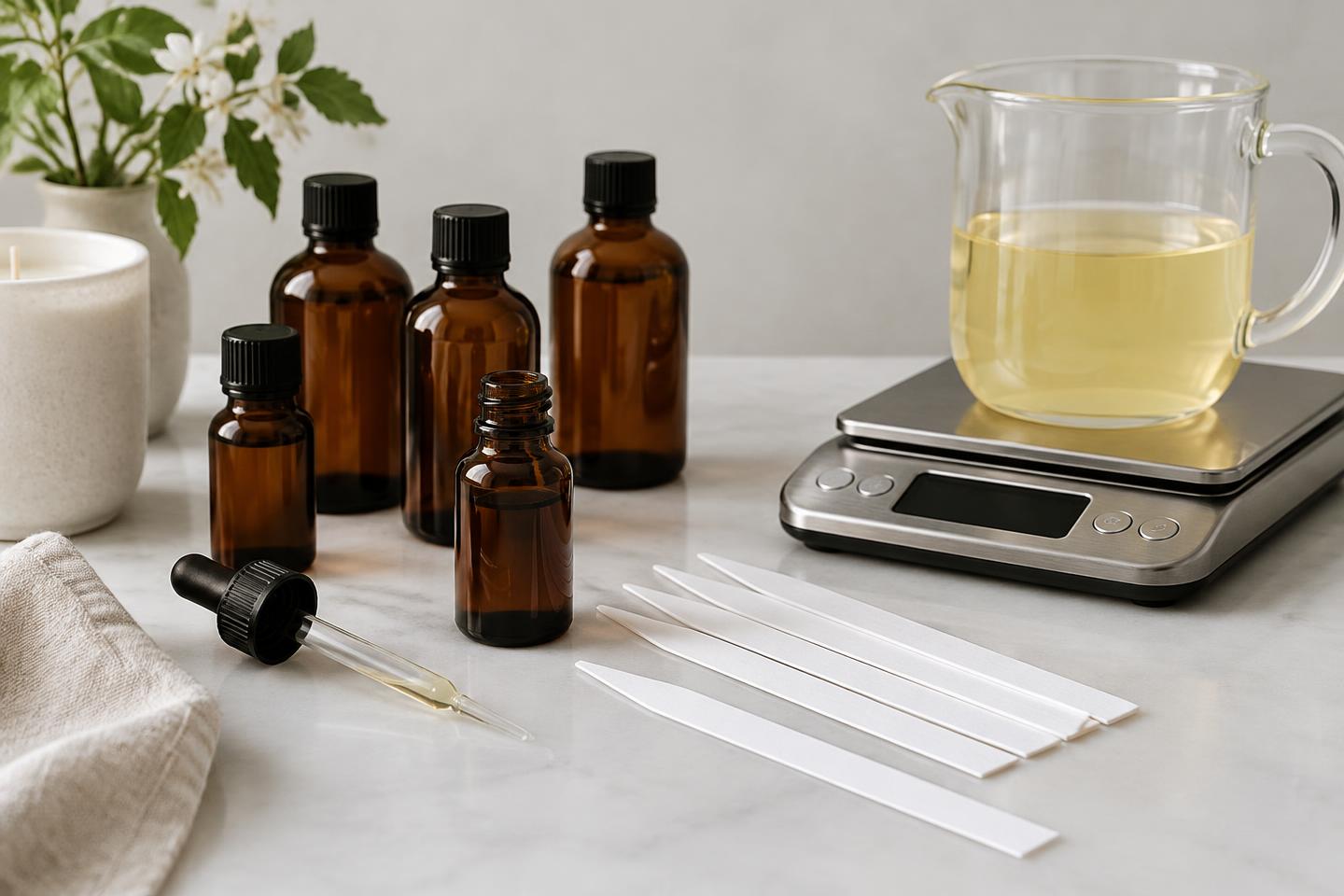
The short answer: to make scented candles that smell strong, use candle-safe fragrance oil (not most essential oils on their own), weigh it at a tested fragrance load, add it to wax at the temperature your wax supplier recommends, stir for about two minutes, let the candle cure, and make sure the wick creates a full, healthy melt pool. Weak smell usually comes from adding oil too cool, skipping cure, or an undersized wick — not from too little oil.
Fragrance oil vs essential oil
| Candle fragrance oil | Essential oil | |
|---|---|---|
| Made for candles | Yes, tested in wax | Not usually |
| Scent throw | Generally stronger | Often weaker, can flash off |
| Safety data | IFRA documents typically provided | Varies by supplier |
| Cost | Moderate | Often higher |
| Flash point | Listed by supplier | Some are low |
CandleScience explains how to judge a fragrance before it goes in wax in its guide to evaluating fragrance oils, including out-of-bottle, cold throw and hot throw checks.
How much fragrance oil to add
Start one or two points below your wax's maximum and test upward. CandleScience's hot throw guide recommends exactly that and warns that overloading wax can cause performance problems. See fragrance load, explained for the math.
8 fixes for candles that don't smell strong
- Add fragrance oil at your wax's recommended temperature so it binds well.
- Stir gently but thoroughly for about two minutes, then again before pouring.
- Weigh fragrance oil on a scale — guessing usually means underdosing.
- Cure the candle; soy often needs one to two weeks — see cure time.
- Check the wick: a narrow melt pool releases less scent — see tunneling and melt pools.
- Test in a small closed room before judging throw.
- Store fragrance oils cool and capped — see fragrance oil storage.
- Try a different wax: some blends are known for stronger throw than straight soy.
Fictional share of 20 weak-throw test candles by root cause. It shows why checking temperature, cure and wick comes before adding more oil.
Chart data
| Item | Value ( candles) |
|---|---|
| Added oil too cool | 6 candles |
| Not cured | 5 candles |
| Undersized wick | 5 candles |
| Fragrance load too low | 3 candles |
| Old fragrance oil | 1 candles |
More oil is not the answer
Going over the wax's maximum load can cause oil to seep, poor burning and soot, and it can exceed the fragrance's IFRA limit. Stay within both numbers — see IFRA vs wax limits — and use a repeatable hot and cold throw test to compare changes fairly.
Use the free candle calculator to get fragrance weights exact for any jar, and log scent tests in WaxLogic next to the recipe.
Run your candle business in one place
Inventory, recipes, production, wholesale and invoicing — 7 days free, no card needed.
Start free trial