
The Pour Logic: fragrance oil storage, shelf life and lot tracking for candle makers
October 8, 2026 · 4 min read
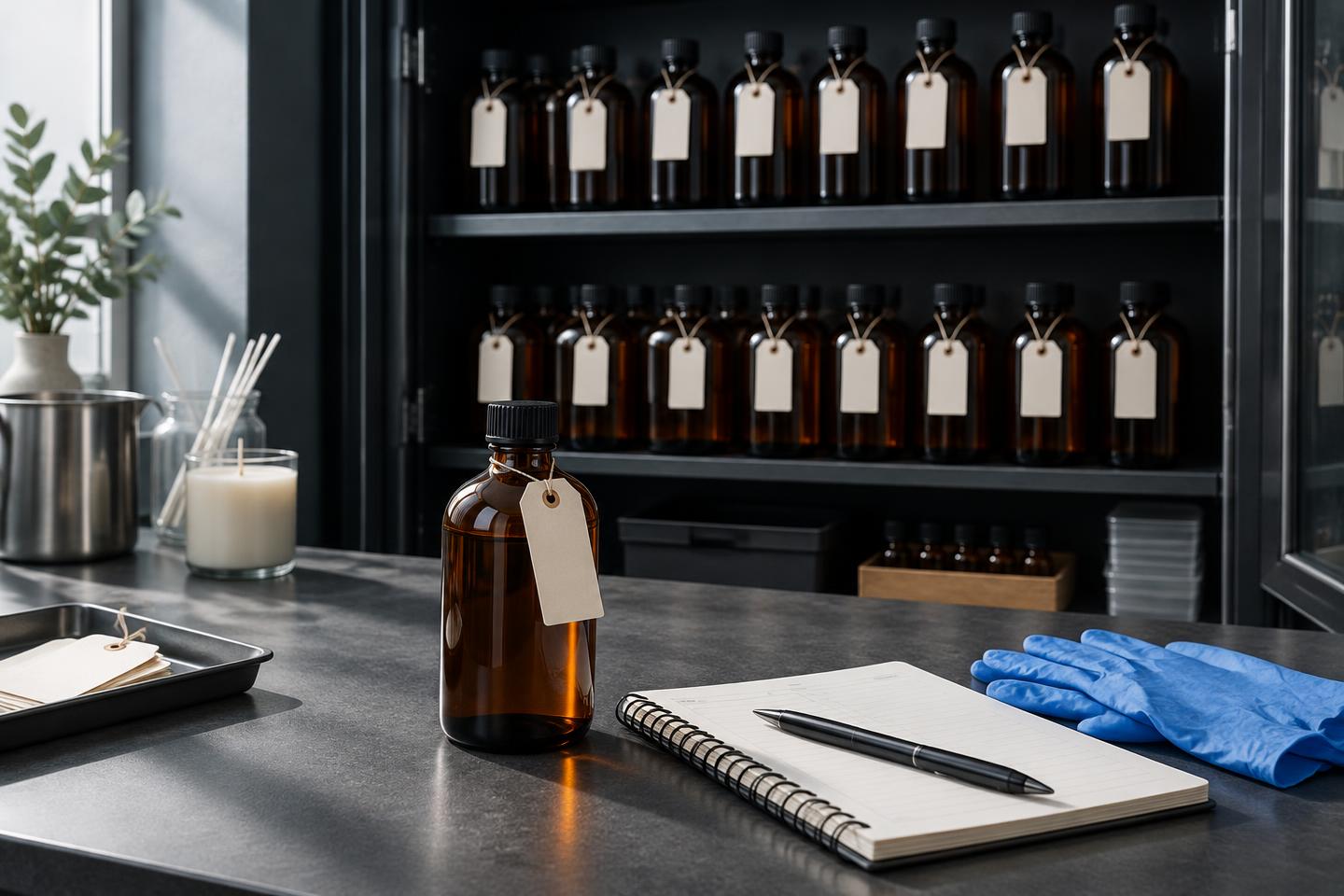
The short answer: fragrance oil does not cross from good to bad on one universal expiration date. Storage conditions, composition, container, headspace and handling all affect change over time. Follow the supplier's shelf-life and storage guidance for the exact oil, keep heat and light exposure controlled, and track each supplier lot so an odor, color or performance shift can be traced instead of guessed.
CandleScience says fragrance oils are generally best used within about a year, while also noting that many remain usable longer when stored properly in a cool, dark place; read its fragrance-oil shelf-life guidance as supplier advice, not a chemical expiration law. If your supplier gives a different period or storage range, its documentation for that oil takes priority.
What changes an oil in storage?
Oxygen, elevated temperature, light and repeated container opening can contribute to oxidation or other changes. Possible signs include a shifted aroma, darkening, thickening or performance that no longer matches the approved recipe. A naturally dark oil is not automatically old, and a clear oil is not automatically in specification. Compare against the supplier information and a retained reference where practical.
| Variable | Why track it | Practical control |
|---|---|---|
| Supplier lot | Formulas can change between receipts | Record lot or batch reference exactly |
| Receipt and open dates | Separates age from time repeatedly handled | Label both dates without replacing the supplier label |
| Heat and light | Can accelerate change | Use a stable, cool, dark storage area per supplier guidance |
| Headspace and closure | More air exposure and poor seals complicate storage | Keep compatible caps closed; use appropriate working containers |
| Appearance and odor | Creates a comparison trail | Record observations, not just pass/fail |
FIFO helps, but FEFO can be more precise
First in, first out uses the oldest receipt first. First expired, first out uses the supplier's documented date or period where one exists. Neither method means blindly pouring an oil that has changed. Quarantine questionable material, compare it with documentation and contact the supplier. Do not mix an old questionable lot into a new one to avoid waste.
Fictional inventory snapshot. The chart shows why lot-level quantities are more useful than one combined total; it makes no shelf-life claim.
Chart data
| Item | Value ( oz) |
|---|---|
| Lot A — oldest | 14 oz |
| Lot B | 32 oz |
| Lot C — newest | 48 oz |
A system showing 94 oz of 'Vanilla' without lots cannot tell a maker which bottle went into a batch or which stock to investigate. Lot-level records can. Preserve the original product identity, safety data and current IFRA documentation as separate records; an IFRA certificate addresses use restrictions, not whether an opened bottle still matches its original sensory profile.
Build a small-studio receiving routine
- Confirm the fragrance name, supplier, container condition and quantity received.
- Record the supplier lot or batch reference and receipt date before shelving it.
- Keep the original label and link the current safety and application documents.
- Assign a stable storage location away from inappropriate heat or direct light.
- Open one working container at a time where practical, and record the open date.
- Use the oldest suitable lot first and preserve enough identification to trace every production batch.
Do not diagnose quality from color alone
Vanillin and other components can make some oils naturally darker or can discolor wax over time. That is different from proving the oil has degraded. Evaluate identity, odor and production performance together. If an older lot behaves differently in a candle, hold the affected product and run a controlled comparison instead of increasing the fragrance load to compensate.
| Keep constant | Change | Compare |
|---|---|---|
| Wax, wick, vessel, load and process | Old lot versus current lot | Cold odor, appearance and burn-test observations |
| Sample size and cure interval | Only fragrance lot | Like-for-like performance |
| Documentation method | Lot reference | Whether the difference repeats |
When should fragrance oil be retired?
Retire or quarantine it when the supplier instructs you to, when the container or identity is compromised, or when controlled checks show it no longer meets the specification you rely on. Calendar age can trigger a review; it should not be disguised as a universal pass/fail rule. Follow disposal guidance in the safety data sheet and local requirements rather than pouring unwanted oil down a drain.
Connect the lot used to each batch and recipe revision in WaxLogic so an investigation has a starting point. Pair this system with IFRA limits versus fragrance load, fragrance-load math and the batch quality-control checklist.
Run your candle business in one place
Inventory, recipes, production, wholesale and invoicing — 7 days free, no card needed.
Start free trial