
The Pour Logic: why candles soot and wicks mushroom — causes and fixes
October 10, 2026 · 3 min read
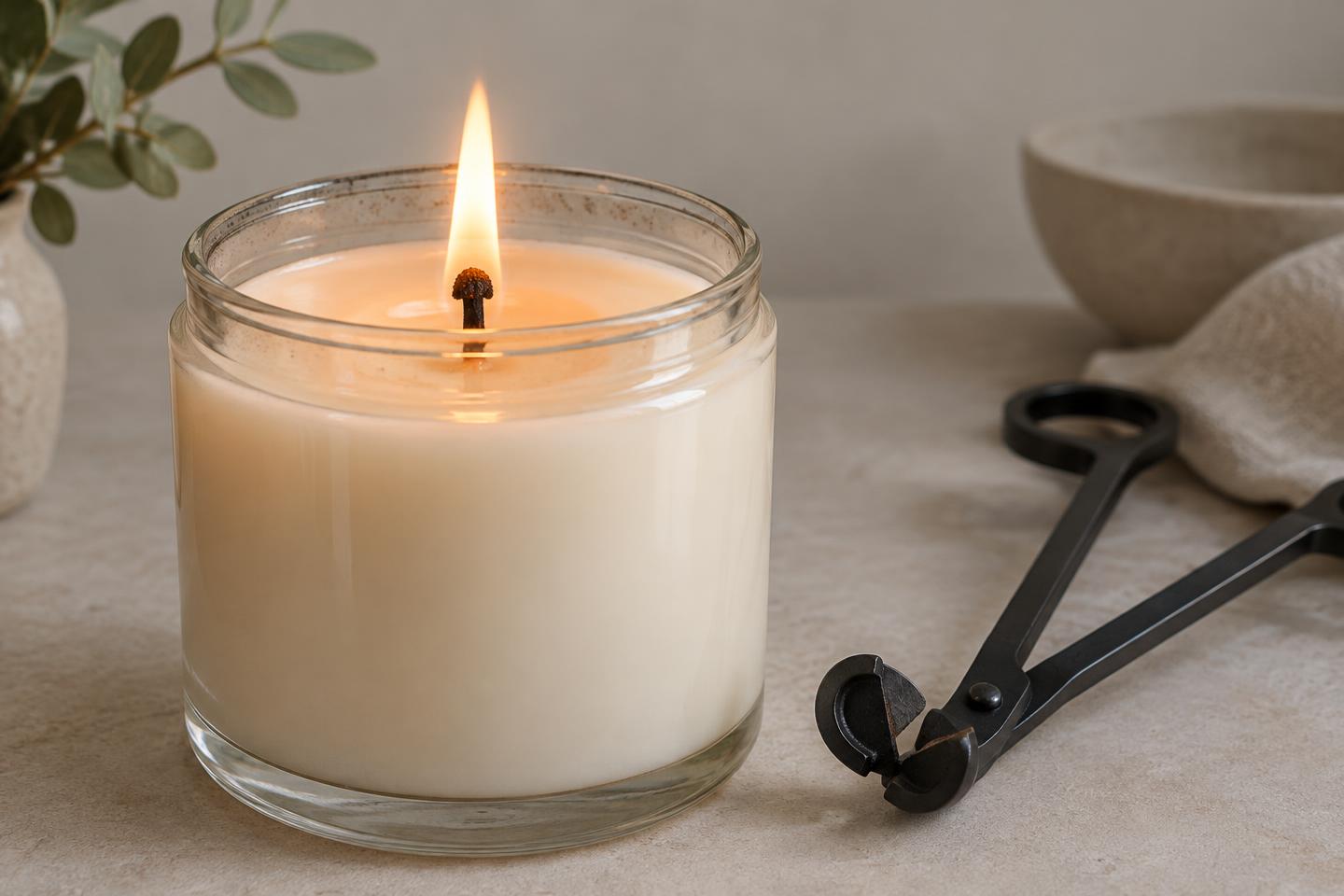
The short answer: soot and mushrooming usually mean the flame is getting more fuel than it can burn cleanly. The most common causes are a wick that is too large for the formula and vessel, an untrimmed wick, drafts, or a formula with heavy fragrance or dye load. Fix the variable you can control first — trim and draft conditions — then retest wick size with your exact recipe.
Soot vs mushrooming: related, not identical
| Symptom | What it looks like | Common contributors |
|---|---|---|
| Mushrooming | Carbon ball forms on the wick tip | Oversized wick, incomplete combustion, some fragrance or dye components |
| Black smoke | Visible smoke trail from the flame | Tall or flickering flame, drafts, untrimmed wick |
| Soot ring on glass | Dark film near the rim | Repeated flickering, oversized wick, deep containers trapping air |
| Large, dancing flame | Flame much taller than expected | Wick too large, wick not trimmed, debris in the melt pool |
A small amount of carbon buildup can occur with many wick types, especially late in a long burn. The concern is buildup that grows quickly, falls into the melt pool, or comes with smoke and an unstable flame. CandleScience's wick-sizing guide shows how over-wicked candles typically behave compared with appropriately sized ones.
Test in this order
- Trim the wick to the length your supplier recommends (commonly around 1/4 inch) and relight in a draft-free room.
- Burn for a consistent interval and photograph the flame at fixed checkpoints.
- If smoke or mushrooming persists, test the next smaller wick in the same series with the identical recipe.
- If a smaller wick tunnels, keep the wick and test a lower fragrance or dye load instead.
- Change one variable per test round and record each result against the recipe revision.
Fictional test data for one 3-inch vessel and one formula. It is a teaching example of how a log can compare candidates, not a recommended flame height.
Chart data
| Item | Value ( in) |
|---|---|
| Wick A (smaller) | 0.9 in |
| Wick B | 1.2 in |
| Wick C | 1.6 in |
| Wick D (larger) | 2.3 in |
In the example, Wick D shows the tall flame pattern often associated with soot and mushrooming. Wick B or C would be the next candidates to burn all the way down — the tunneling and melt pool guide explains why a full-burn record matters more than the first session.
What customers can do — and what you should tell them
Many soot complaints come from use, not formulation. The National Candle Association's candle fire safety tips recommend trimming wicks before every burn, keeping candles away from drafts, and never leaving a burning candle unattended. Include trimming and burn-time guidance on your label or care card so customers have the same instructions you test with.
When to retest an existing product
Retest after changing fragrance oil, dye, wax supplier, wick lot or vessel. Supplier reformulations can shift burn behavior even when the product name stays the same. WaxLogic's burn-test logs tie each observation to a product, recipe and batch so you can see when a change started — pair it with the wick testing guide and batch QC checklist.
Run your candle business in one place
Inventory, recipes, production, wholesale and invoicing — 7 days free, no card needed.
Start free trial