
Margin Logic: how to price wax melts by the clamshell (with the math)
October 10, 2026 · 3 min read
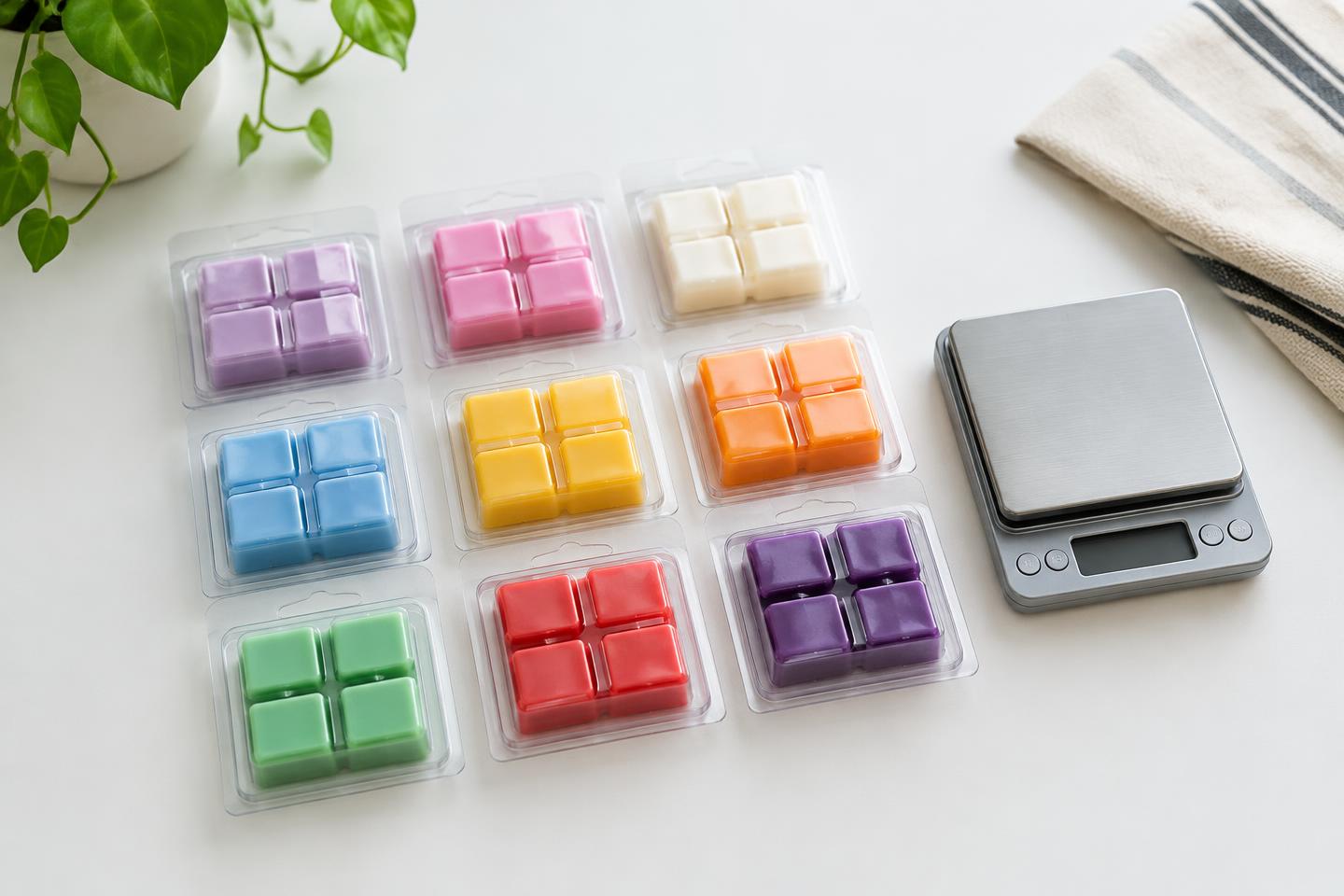
The short answer: price a wax melt clamshell from its measured fill weight, fragrance load and packaging cost — not from what other shops charge. Melts have no wick or glass vessel, so material cost per unit is usually lower than a jar candle, but packaging and labor become a much larger share of the total. Calculate cost per clamshell first, then apply a retail multiplier and confirm the wholesale price still clears your floor.
Start with the actual fill weight
Clamshells are sold by cavity count and nominal capacity, but what matters is the weight of mixture you actually pour. Weigh five filled clamshells, subtract the empty tray weight, and average the result. That number — not the supplier's listing — is the basis for every calculation below.
Example only: a 2.5 oz fill at a 10% wax-basis fragrance load uses 2.27 oz wax and 0.23 oz fragrance oil. Always confirm the maximum fragrance load your wax supplier and fragrance supplier allow for melts; the IFRA vs wax limits guide explains why both numbers matter.
Example cost breakdown for one clamshell
Fictional prices for teaching. Packaging and labor can outweigh wax in melts — swap in your own supplier invoices.
Chart data
| Item | Value ($) |
|---|---|
| Wax | $0.34 |
| Fragrance oil | $0.46 |
| Clamshell | $0.28 |
| Label | $0.12 |
| Labor share | $0.60 |
In that example the total is $1.80 per clamshell. Notice that wax is the smallest line item. Makers who price melts as "a fraction of a candle" often forget that clamshells, labels and the time spent filling and sealing scale per unit, not per pound of wax.
Turn cost into retail and wholesale prices
| Approach | Multiplier | Price | Gross margin on price |
|---|---|---|---|
| Wholesale floor | 2× | $3.60 | 50% |
| Typical wholesale | 2.5× | $4.50 | 60% |
| Retail (keystone of wholesale) | 5× | $9.00 | 80% |
| Retail, 3-pack bundle | 3 × $1.80 × 4.4 | $24.00 | ≈ 77% |
Gross margin here equals (price − cost) ÷ price. These multipliers are illustrations, not industry standards. Check them against what your market will pay and against the overhead you need to cover. The U.S. Small Business Administration's guide to managing business finances is a useful refresher on separating unit costs from fixed costs.
Where melt margins quietly leak
- Overfilling cavities to make trays look full — 0.2 oz extra per tray adds up across hundreds of units.
- Pricing every scent the same when some fragrance oils cost twice as much per ounce.
- Ignoring rejects: cracked trays, frosting or bubbles that you keep as personal stock.
- Free shipping thresholds set for candles that make light, low-priced melt orders unprofitable.
- Forgetting payment-processing and marketplace fees, which take a larger percentage bite from small tickets.
Should melts be priced per ounce or per tray?
Customers compare trays, not ounces, so the shelf price is per clamshell. Internally, keep a per-ounce cost so you can compare formats honestly. If a 2.5 oz tray and an 8 oz candle use the same fragrance, the per-ounce view shows whether melts are subsidizing candles or the other way around.
WaxLogic's candle calculator handles melts too: enter the clamshell's measured fill weight as the capacity and the calculator returns wax and oil weights for any quantity. For the full cost model, see how to calculate cost per candle and the broader candle pricing guide.
Run your candle business in one place
Inventory, recipes, production, wholesale and invoicing — 7 days free, no card needed.
Start free trial