
How to grow your candle business from markets to wholesale retail partners
October 12, 2026 · 6 min read
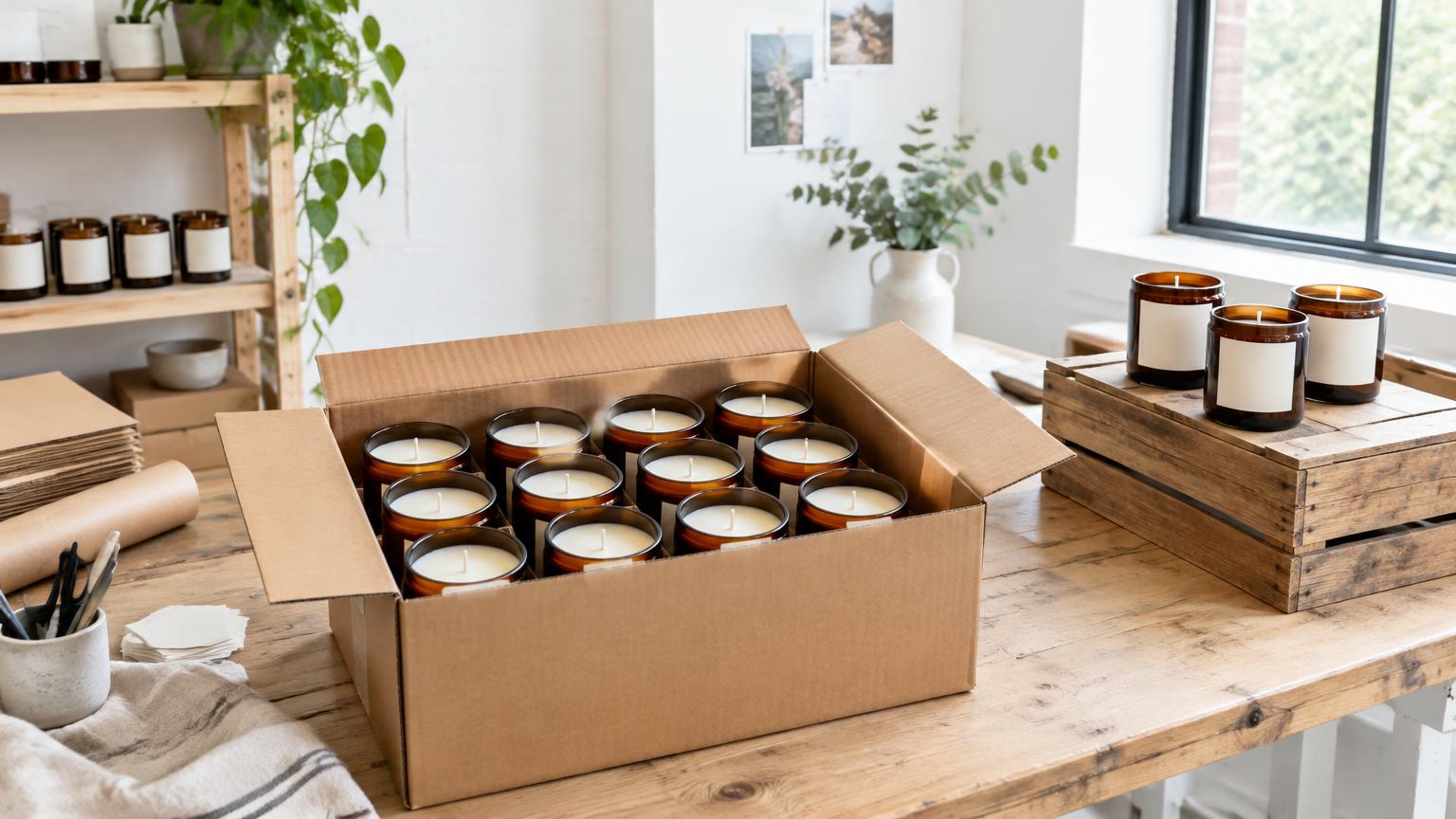
The short answer: you grow a candle business beyond markets by doing four things in order — price for wholesale, build a line sheet, make sure you can actually produce the volume, and set up a simple system to keep retail partners reordering. Skip a step and growth tends to cost you money instead of making it.
We call this the WaxLogic Growth Ladder: Market → Online → Wholesale → Repeat. Markets prove people want your candles. Online sales prove they'll buy without meeting you. Wholesale multiplies volume. Repeat orders are where the business becomes stable. Here's how to climb each rung.
Step 1 — Price for wholesale before you pitch anyone. Retail partners usually buy at about half of your retail price, so your wholesale price has to cover your full cost per candle and still leave profit. If your true cost is $7 and you sell at $14 retail, a $7 wholesale price earns you nothing. Work out your real number first with our guide to calculating your true cost per candle, then set retail at roughly 2x to 2.5x that cost.
Step 2 — Build a line sheet. A line sheet is a one- or two-page catalog for shops: product photos, scent names, sizes, wholesale price, suggested retail price, case packs, and your minimum order. Buyers expect one, and having it ready makes a small studio look established. Keep it to your strongest sellers — a focused line of 6 to 12 scents is easier for a shop to say yes to than 40.
Step 3 — Set clear wholesale terms. Decide your opening order minimum (many makers use $150–$300), your reorder minimum, case pack size (often 4 or 6 per scent), lead time, and payment terms. Write them down once and put them on the line sheet so every shop gets the same deal.
Step 4 — Check your production capacity. A single shop ordering 6 scents in cases of 6 is 36 candles, plus cure time. Five shops is 180. Before you say yes, know how many candles you can pour, cure, and label in a week, and whether you have the wax, fragrance oil, and vessels on hand. Running out of jars mid-order is how first impressions with a new retail partner go wrong. Our free candle calculator gives you exact wax and fragrance weights for any batch size so you can plan materials before you commit.
Step 5 — Find the right shops. Start local: boutiques, gift shops, home décor stores, florists, and cafés that already sell handmade goods. Visit in person with samples if you can, or send a short, personal note with your line sheet attached. One good-fit shop that reorders every six weeks is worth more than ten one-time orders.
Step 6 — Keep them reordering. Most wholesale growth comes from repeat orders, not new accounts. Track what each shop bought and when, and follow up before they run out — usually 4 to 8 weeks after delivery. Send invoices promptly and keep an eye on who owes you, because unpaid net-30 invoices are the quiet cash-flow killer of growing studios.
Common mistakes to avoid: pricing wholesale off material costs only, offering too many scents, taking orders you can't produce on time, and relying on memory to know when a shop is due to reorder.
The U.S. Small Business Administration's guide to growing your business is a helpful general reference once wholesale is underway, especially for financing and hiring decisions.
This is the growth path WaxLogic is built around. Product costs come straight from your recipes, production batches check your stock before you pour, wholesale line sheets pull your wholesale prices automatically, and the Companies view shows every retail partner's order history and when they're due to reorder — with AI to help draft the follow-up you send from your own email. You can try WaxLogic free for 7 days, then it's $14.99/month.
Run your candle business in one place
Inventory, recipes, production, wholesale and invoicing — 7 days free, no card needed.
Start free trial