
Coconut wax candles: pros, cons, and how to make them (what "coconut wax" really is)
October 13, 2026 · 3 min read
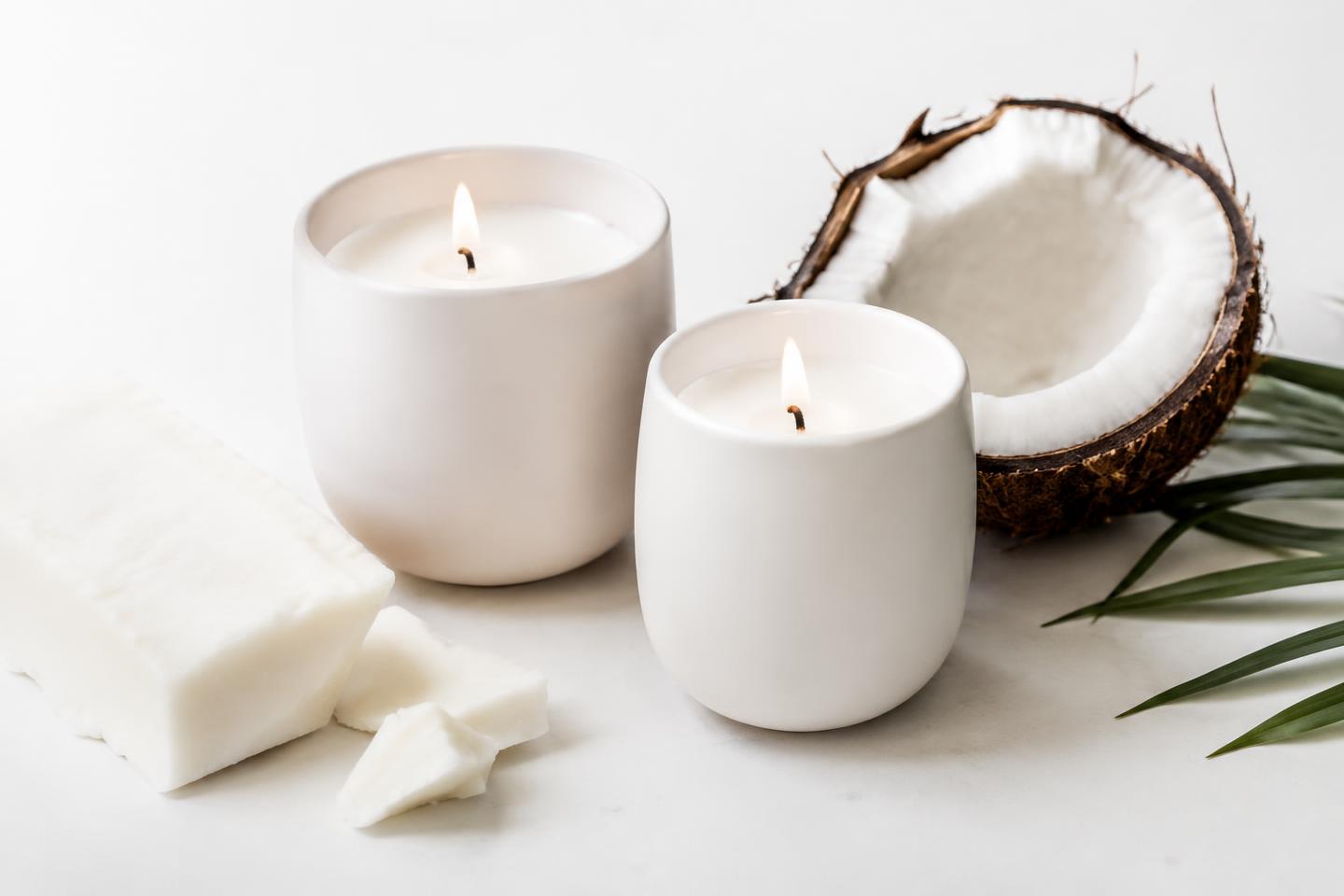
The short answer: coconut wax candles are made with a soft, creamy wax derived from coconut oil — but most candle "coconut wax" is actually a blend, often with soy, apricot, other vegetable waxes or paraffin. Coconut blends are known for smooth tops, good glass adhesion and strong scent throw. They are softer and usually more expensive than straight soy, and you should know exactly what is in your blend before you market the candle.
What is in "coconut wax"?
Pure coconut oil is too soft to make a container candle on its own, so suppliers blend it. For example, CandleScience describes its Coconut Apricot wax as a blend of soy, coconut, apricot and paraffin. That matters: if your blend contains paraffin, avoid labeling the candle "paraffin-free" or "all-natural." Read your supplier's spec sheet.
Coconut wax pros and cons
| Coconut blends | Soy | |
|---|---|---|
| Surface finish | Usually smooth, creamy | More prone to frosting |
| Glass adhesion | Often good | Wet spots are common |
| Scent throw | Often strong | Good, needs longer cure |
| Softness | Soft — container only | Firmer options exist |
| Cost | Usually higher per pound | Usually lower |
| Cure time | Can be short for some blends | Often 1–2 weeks |
Some coconut blends support higher fragrance loads than typical soy — CandleScience lists its Coconut Apricot wax at up to 15%. Always use your specific wax's number and stay within your fragrance's IFRA limit; see IFRA vs wax limits.
Fictional prices per pound applied to 7.4 oz of wax. Check current supplier prices; they change often.
Chart data
| Item | Value ($) |
|---|---|
| Soy | $1.02 |
| Coconut blend | $2.48 |
| Beeswax | $3.47 |
How to make a coconut wax candle
- Weigh wax and fragrance — the candle calculator handles any load.
- Melt the wax to the supplier's recommended temperature.
- Add fragrance oil at the recommended temperature and stir about two minutes.
- Pour at the supplier's pour temperature into a clean jar with a centered wick.
- Cool at room temperature, then cure as long as your wax recommends.
- Burn-test: some coconut blends behave differently from soy and may not need a classic full melt pool.
Wicking coconut wax
Because coconut blends are soft and often throw strongly, wick recommendations differ from soy. Start with your supplier's chart — CandleScience's container wicking guide suggests wicking up or down depending on fragrance amount, density and dye — then confirm with a full burn test.
Comparing waxes for your line? Read soy vs paraffin vs coconut and price the premium properly with how to price candles for profit. WaxLogic tracks wax cost per batch so you can see the real margin difference.
Run your candle business in one place
Inventory, recipes, production, wholesale and invoicing — 7 days free, no card needed.
Start free trial