
Soy vs paraffin vs coconut wax: what each one means for your candle business, not just your candles
October 7, 2026 · 5 min read
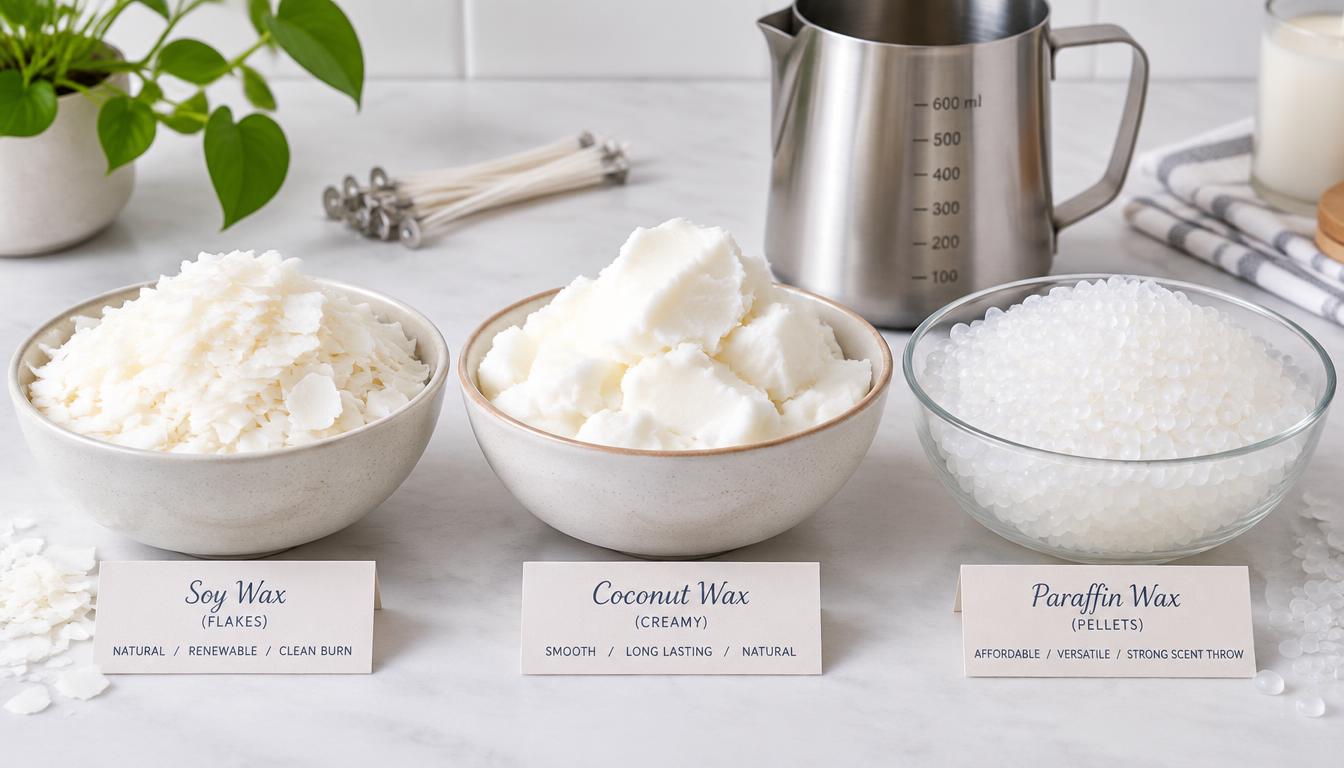
The short answer: paraffin is the cheapest and throws scent the hardest, soy is the market favorite for handmade brands with a story customers want to hear, and coconut blends are the premium option with the best finish and the highest cost. The right choice is the one whose cost, performance, and story all fit your price point.
Paraffin: the least expensive wax per pound and the strongest scent throw, hot and cold. Its downsides are perception and soot — a growing share of candle buyers actively avoid it, and '100% soy' or 'coconut soy' has become a selling point in itself. If your brand is budget or novelty, paraffin can still make sense; if your brand is natural or premium, it undercuts your story.
Soy: the workhorse of the handmade candle world. Mid-range cost, renewable, clean-burning, and 'soy candle' is literally what customers search for. It holds roughly a 10–12% maximum fragrance load, throws a bit softer than paraffin, and can frost or pull away from glass — cosmetic issues customers forgive in handmade goods. For most small makers, container soy is the default for a reason.
Coconut and coconut-soy blends: the premium tier. Excellent glass adhesion, creamy finish, strong throw, and a luxurious burn — at the highest cost per pound of the three. If your candles retail at $35+, coconut blends justify their cost; at $16, they'll eat your margin alive.
The business math nobody does: wax is usually the single largest material cost in a candle, and the difference between waxes is real money at scale. If your 8 oz candle uses about 188 grams of wax, a $1.50-per-pound difference between waxes is roughly $0.62 per candle — over a thousand candles a year, that's $620 of margin moving in or out of your pocket. Run your own numbers with our free candle calculator.
Density matters too: soy wax is about 0.86 times the density of water, and blends vary — so the same vessel needs different wax weights depending on what you pour. That's built into the calculator, and in WaxLogic it's built into every recipe, so your batch math and your costs stay right when you switch or blend waxes.
Our honest advice: pick one wax, learn it completely, and build your recipes, wick tests, and costs around it. Switching waxes later means re-testing every wick and re-costing every product — doable, but it's a project, not an afternoon.
Run your candle business in one place
Inventory, recipes, production, wholesale and invoicing — 7 days free, no card needed.
Start free trial