
Batch Logic: how to number candle batches and trace every jar back to its pour
October 29, 2026 · 4 min read
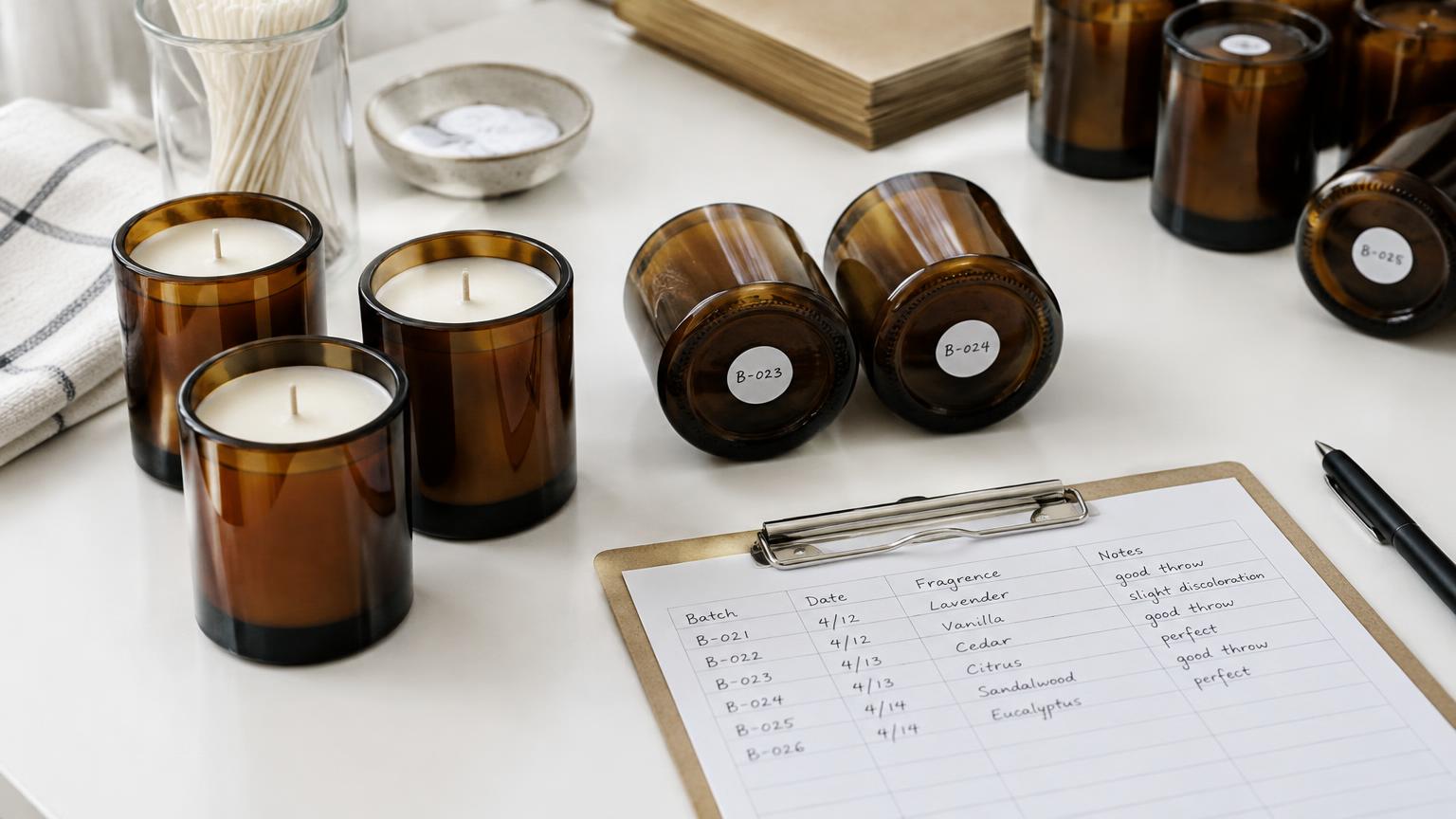
The short answer: give every pour a unique batch number, put that number on each candle (a bottom sticker works), and record which wax, fragrance, wick and vessel lots went into it. Then, when a customer or retail partner reports a problem, you can find every candle from the same pour in minutes instead of guessing. You do not need special equipment—just a consistent code and a log you actually keep.
Why small makers need batch numbers
- Complaints: a report of soot, a cracked jar or weak scent can be checked against the exact recipe and supply lots used.
- Supplier changes: if a fragrance supplier reformulates, you can see which batches used the old and new lots.
- Wholesale: retail partners increasingly ask how you track product quality. A batch code on the label is an easy, credible answer.
- Learning: comparing batches shows which pour temperatures, cure times and rooms gave your best results.
A simple batch code format
Keep codes short, sortable and readable without a key. A date-plus-sequence format works for most studios.
| Part | Example | Meaning |
|---|---|---|
| Date | 261029 | Poured October 29, 2026 (YYMMDD) |
| Product code | CDR | Your short code for the scent or product |
| Sequence | 02 | Second batch of that product poured that day |
| Full code | 261029-CDR-02 | Printed on the bottom label of every candle |
Avoid codes that only make sense in your head, and never reuse a number. If a batch is split between two pour sessions, give the second session its own code.
What to record for every batch
- Batch code, product and planned versus actual quantity.
- Wax, fragrance, wick, dye and vessel—with the supplier lot number for each.
- Fragrance load, pour temperature and room conditions.
- Pour date, cure start and the date the batch was released for sale.
- Quality checks and any burn-test results, including failed units you pulled.
- Where the candles went: markets, online orders or specific retail partners.
How to trace a complaint, step by step
- Ask the customer for the batch code on the bottom of the candle and a photo.
- Pull up the batch record to see the recipe, supply lots and pour notes.
- Check whether other batches used the same fragrance, wick or vessel lot.
- Find where the rest of the batch was sold or is still on your shelf.
- Hold remaining stock from that batch while you investigate, and burn-test a retained sample.
- Record what you found and what you changed so the next batch benefits.
Spreadsheet or software?
A spreadsheet works when you pour a few batches a month. It gets harder once you have many scents, multiple supply lots and retail partners, because the links between supplies, batches and orders live in separate tabs. In WaxLogic, each batch is tied to the product recipe, supply usage is recorded in an audit history, and burn tests link to the batch—so the trail from jar to supply lot is already there.
To keep batches consistent, calculate each pour with the free candle calculator, and see the batch quality-control checklist and fragrance lot-tracking guide. For product-safety context, the U.S. Consumer Product Safety Commission's business guidance explains general responsibilities for consumer products.
Questions candle makers ask
- Do I legally need batch numbers on candles? Requirements vary by market and product; batch codes are a widely used best practice even where not required. Check rules for where you sell.
- Where should the code go? The bottom label is common because it stays on the candle and does not clutter the front.
- Should wax melts get batch codes too? Yes—put the code on the clamshell or its label using the same system.
Run your candle business in one place
Inventory, recipes, production, wholesale and invoicing — 7 days free, no card needed.
Start free trial